One rig for a cast of low poly characters
A stylised character and a snowman conductor share one skeleton with the same bone names, so the walk, idle and wave are keyed once and play on both.
- Role
- Model, rig, skin, animation
- Tools
- Blender, Cycles
- Scope
- Demo built for this page
- Delivered as
- .blend, FBX for Unity/Unreal
-
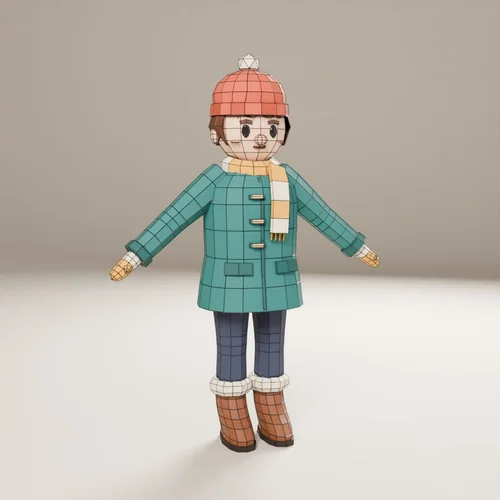
Low poly topology with edge loops at the joints, so elbows, knees and shoulders bend without collapsing.
-
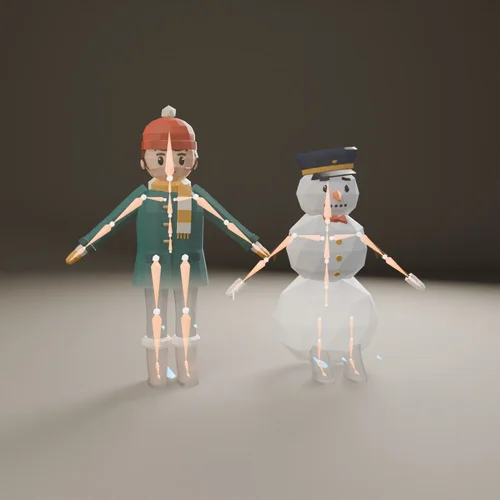
The skeleton inside both characters: identical bone names, which is what lets animation transfer.
-
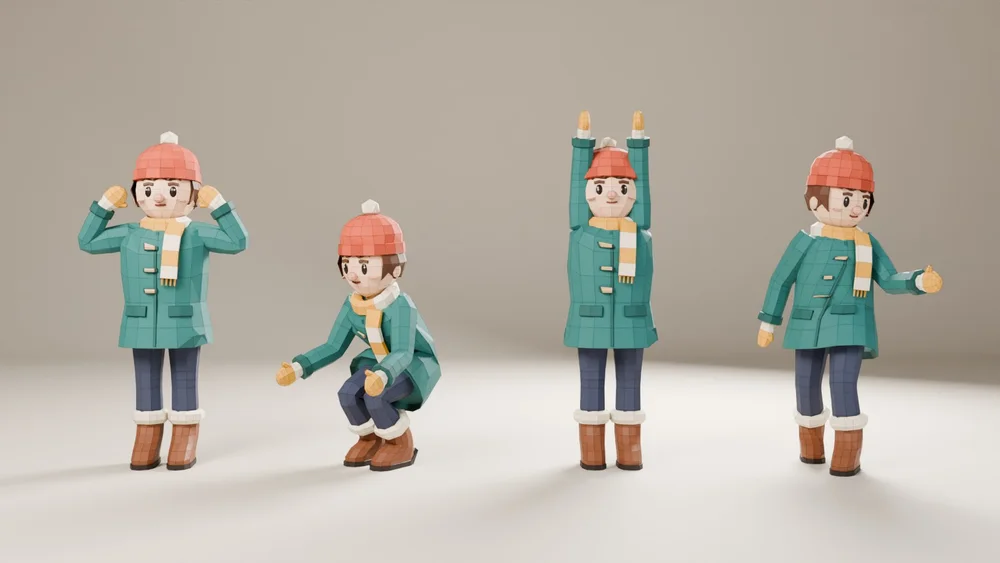
Deformation test at extreme poses: elbows past 120°, a deep crouch, arms overhead, a torso twist.
-
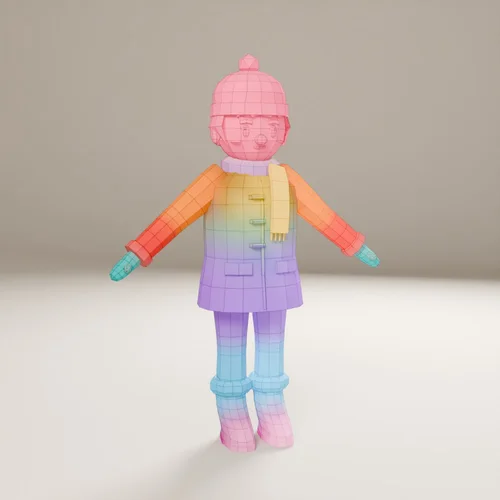
Skin weights: each vertex coloured by the bones that move it, blended at the joints.
-
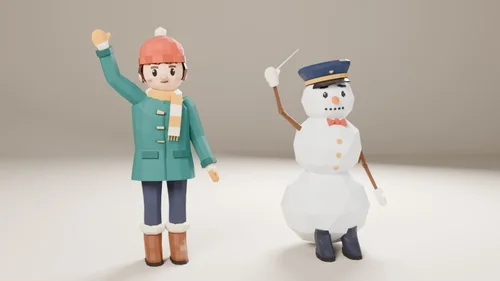
Two very different bodies on one rig: the same bones drive the slim character and the round snowman.
Why one rig: for a cast of many characters (twelve months and a snowman, say) the work goes into one skeleton and one set of motions. Each new body only needs its mesh fitted and skinned to the same bones.
How I work: you send the characters (sketches, a generated mesh or a finished model) and the motion list. I rig and skin one character first and send a short clip, so you judge the deformation and timing before the rest. Communication in writing.