AI marketing system for a small apparel brand, on n8n
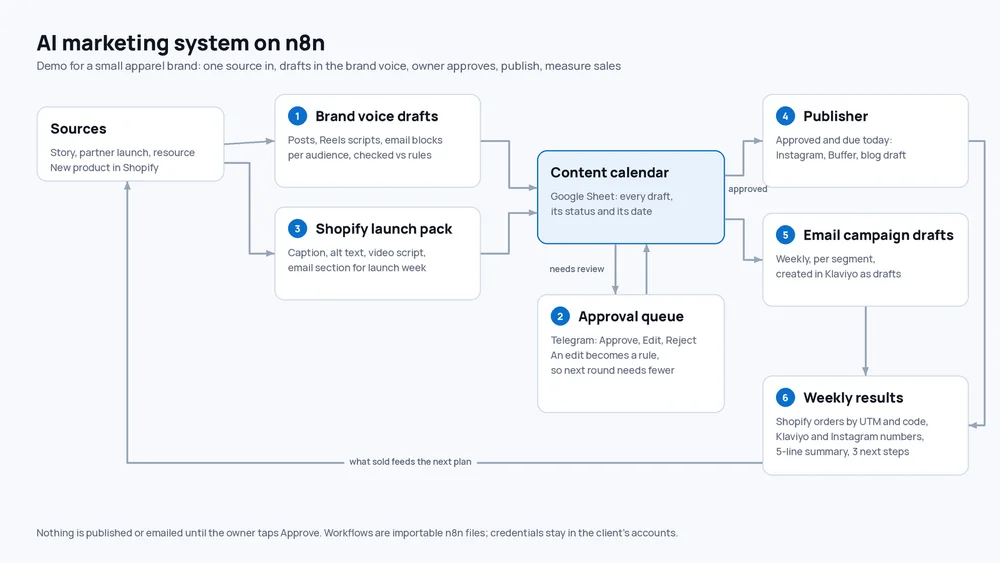
Six n8n workflows that turn one story or one new product into posts, video scripts and emails in the brand's voice, put every draft in front of the owner, publish what was approved and report which stories actually sold.
- Workflows
- 6, importable n8n files
- Stack
- n8n, Claude, Shopify, Klaviyo, Telegram
- Approval
- Nothing goes out without the owner
- Scope
- Demo built for this page
-
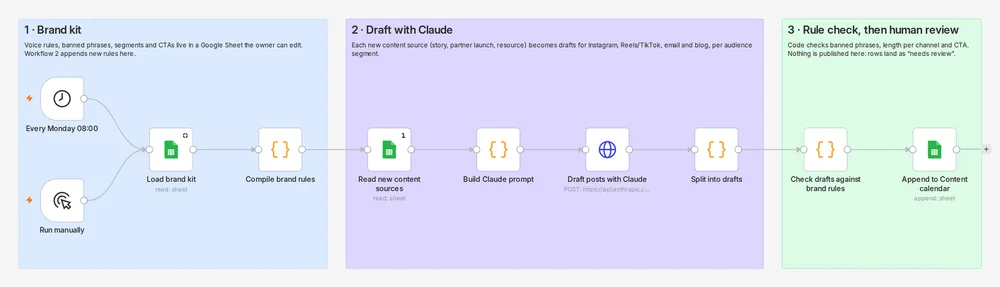
1. Brand voice drafts. One source (a story, a partner launch, a resource) becomes Instagram posts, a Reels script, an email block and a blog intro for each audience. A code step checks every draft against the brand rules: banned phrases, length per channel, a clear call to action.
-
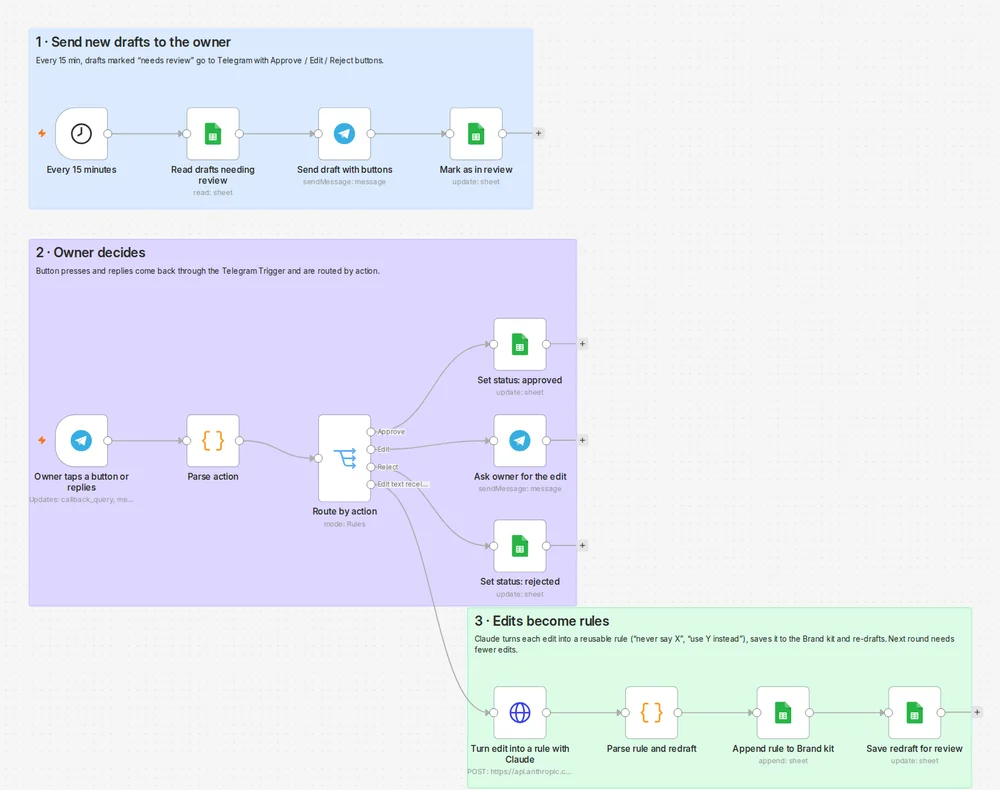
2. Approval queue. Each draft arrives in Telegram with Approve, Edit and Reject. An edit is turned into a reusable rule and saved to the brand rules, so the next round needs fewer edits.
-

3. Shopify launch pack. A new published product gets a caption with alt text, a 30-second video script with shots, an email section and hashtag sets, spread over launch week as drafts.
-
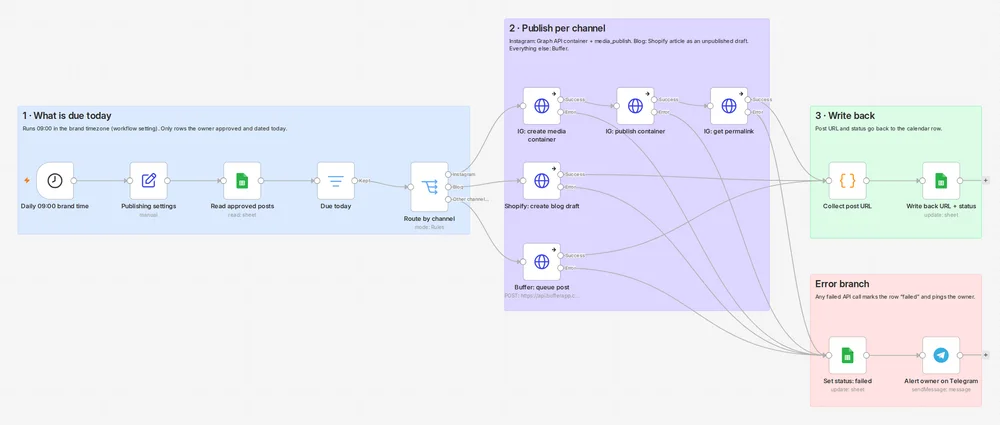
4. Publisher. Every morning it takes what is approved and due today and posts it: Instagram through the Graph API, other channels through Buffer, the blog as an unpublished Shopify article. Failures are marked and sent to Telegram.
-
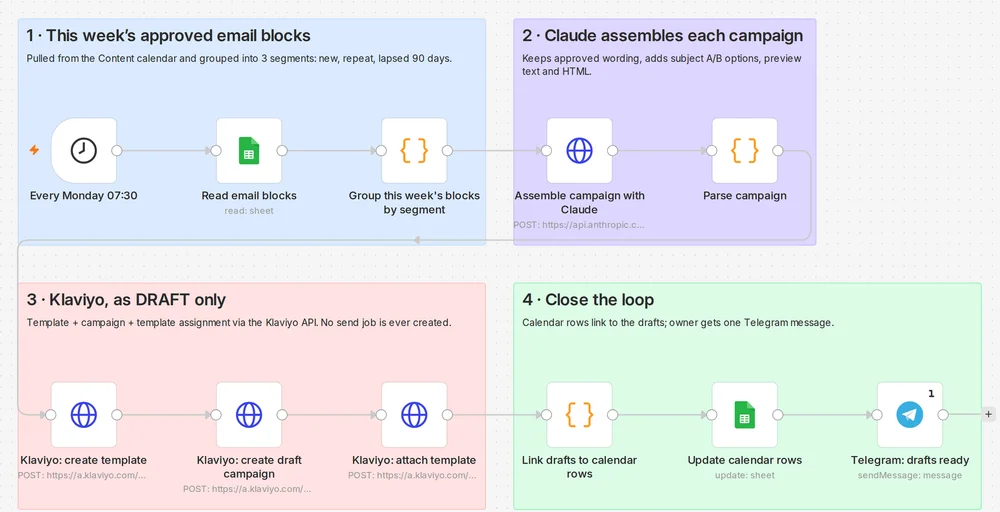
5. Email campaign drafts. Once a week the approved email blocks become one campaign per segment (new, repeat, lapsed customers) with two subject lines to choose from, created in Klaviyo as drafts only.
-
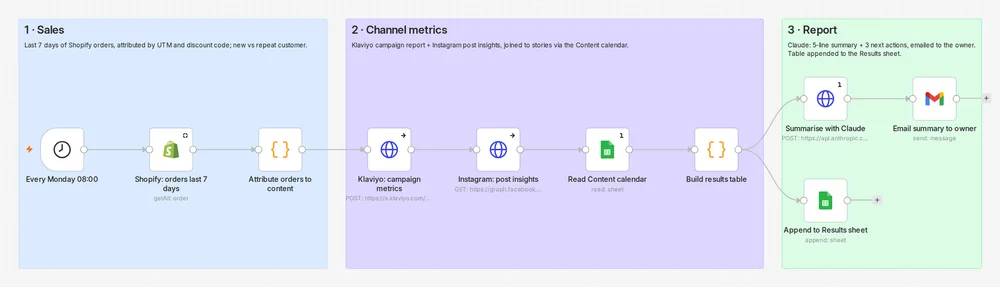
6. Weekly results. Shopify orders are matched to content by UTM tags and discount codes, new and repeat customers are split, Klaviyo and Instagram numbers are added, and the owner gets a five-line summary with three next steps.
What this is. A complete demo for a fictional store, Demo Apparel Co., built to show the whole loop in one place: one source in, drafts in the brand voice, the owner approves, posts and emails go out, and the numbers say which stories sold. The workflows are real n8n files: download them above and import them. They need your own Shopify, Klaviyo, Telegram and Anthropic accounts.
Why approval sits in the middle. The brand’s voice is the asset, so the system never publishes on its own. Every draft waits for the owner, and every edit teaches it: “never say this”, “say it this way” becomes a rule that the next drafts are checked against. The same approach runs my content method for personal brands.
Why measurement starts with sales. Likes are useful, but the weekly report starts from orders: which story or launch brought clicks, orders, revenue and repeat purchases, through UTM tags on every link and a discount code per campaign. Engagement is reported separately so it never gets confused with sales.
What it is not yet. This system was built for this page. It has not run for a client, so there are no sales results to quote. A first client project would start with the brand kit and the approval queue, then connect Shopify and email once the drafts sound right.
How I work. In writing, remotely, with a fixed price for a first small phase.