AI phone receptionist on ElevenLabs
A voice agent that answers calls, takes the caller's details with a readback and a confirmation, and books the call-back straight into your calendar. Live demo below: talk to it in your browser.
Reliable email over the phone
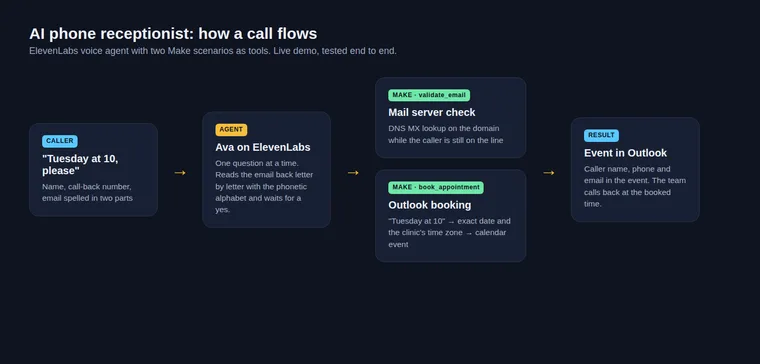
Domain first, then the part before the @ letter by letter with phonetic read-back, a yes from the caller, then a live check that the domain accepts mail.
Booking in Outlook
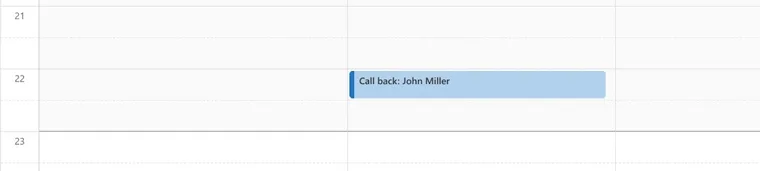
Turns "Tuesday at 10" into the exact date in the business's time zone and creates the call-back event with the caller's details.
Call-back details
Asks for the number when caller ID is missing, reads it back in groups, never invents a number, and flags low-confidence details for a person to check.
Your stack
ElevenLabs Conversational AI, Make.com, Microsoft 365. A phone number through Twilio when you go live.
Case: receptionist for a clinic
The demo answers for a fictional dental clinic in the US. It is built for the problem voice agents usually fail at: capturing an email address over a noisy line, especially from landline callers who cannot receive a text link.
What happens on a call
- Ava greets the caller and asks one thing at a time: name, email, call-back number, preferred time.
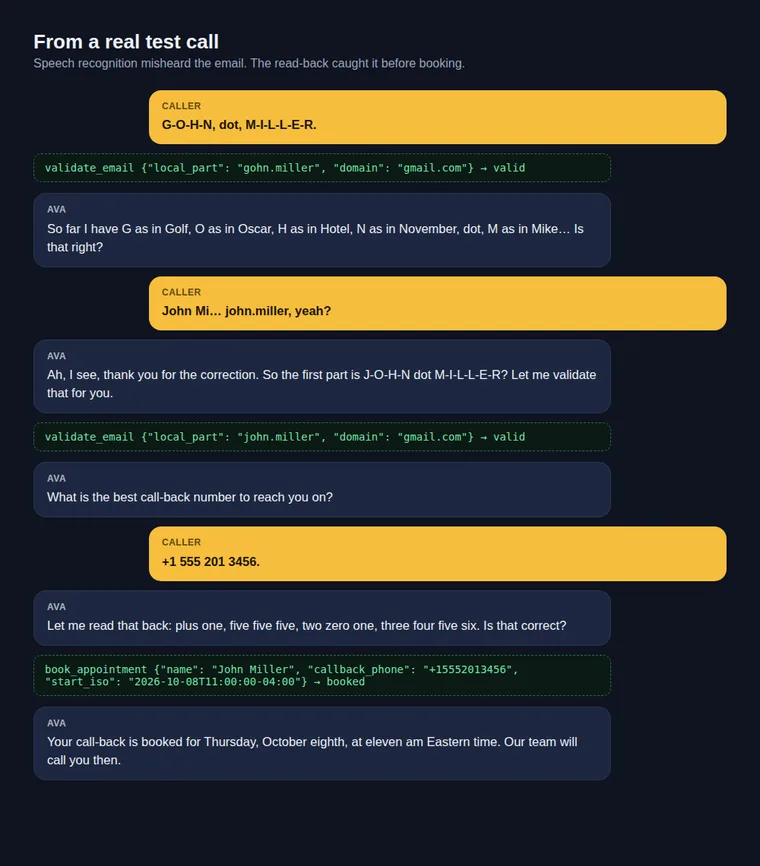
- The email is taken in two parts. The domain is confirmed from common providers; the part before the @ is spelled and read back with the phonetic alphabet until the caller says yes.
- A Make scenario checks that the domain has a mail server while the caller is still on the line.
- The call-back number is read back in groups. With no caller ID (web calls), the agent asks for it instead of guessing.
- “Thursday at 11” becomes an exact date in the clinic’s time zone, and a second Make scenario creates the event in Outlook.
What testing changed
- In the first test the agent invented a phone number when caller ID was empty and promised an email invite the demo does not send. The prompt now forbids both, and the next call passed with the real number.
- In a later call recognition heard “gohn” instead of “john”. The read-back caught it and the caller fixed it on the spot, which is exactly what the two-part capture is for.
- After the goodbye the agent now ends the call instead of asking “are you still there”.
In this demo the event is created without sending an invite, so test calls do not email anyone. Sending the invite is one setting in the same Make scenario.
How we start
You tell me your call script and calendar. I adapt the agent and the two scenarios to your accounts, test it with real calls, and hand it over with a short note on how it works.