Lead Radar: a buyer-intent engine I built and run
Every 3 minutes it reads public forums, job boards and Telegram channels, keeps only people who are actually looking to hire, and delivers each lead with their exact words, how to reach them and how many others already replied. I designed and built it, and I run it every day. The numbers below come straight from the bot.
Numbers as of the last page build
Leads per day
Top international sources (community forums highlighted)
- Himalayas (job board)96
- Telegram channels83
- Freelancer.com49
- Reddit48
- n8n community forum31
- Hacker News20
- Blender Artists forum18
- Make community forum14
-
 45 languages · real estate LeadVillas: villa buyers on Bali and Phuket
 -
 2,500+ offers · 1,000+ bookers TopBookers: castings for models across Asia
- Sources
- Forums, job boards, Telegram
- Delivery
- Telegram card within minutes
- Stack
- TypeScript, Next.js, Claude, SQLite
- Runs on
- My own Linux server, every 3 min
-
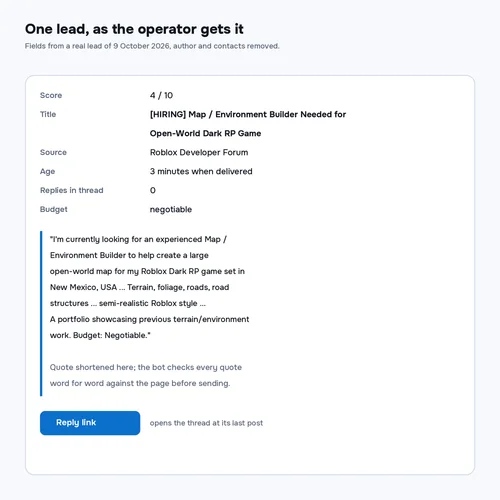
One lead as it arrives: score, title, source, age, replies already in the thread, budget and the buyer's own words, with a link that opens the thread at its last post. Every quote is checked word for word against the page, so nothing is paraphrased or invented.
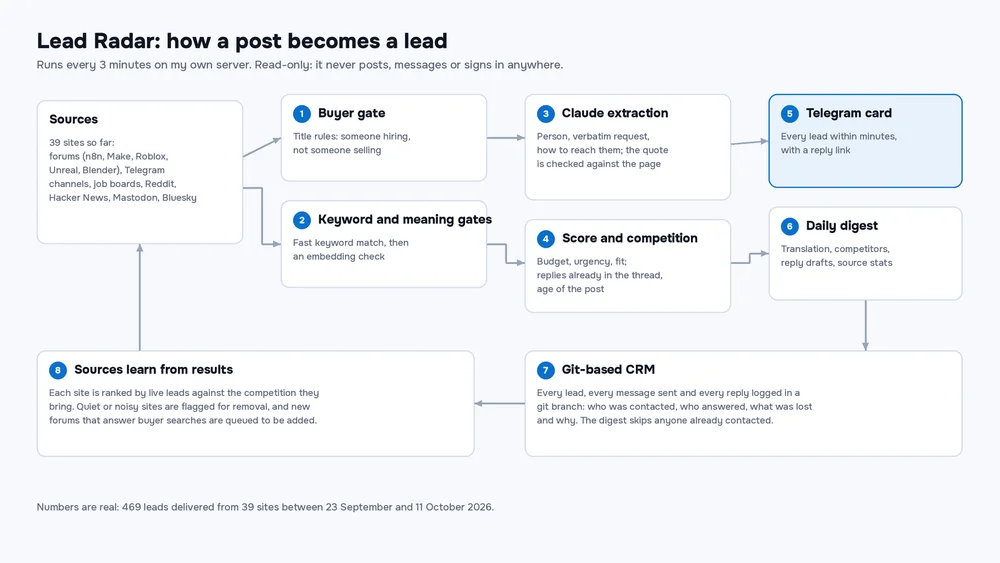
What it does. Lead Radar watches the places where people ask for help before they post a job: tool forums (n8n, Make, Roblox, Unreal, Blender), Telegram channels, job boards, Reddit, Hacker News, Mastodon and Bluesky. A post goes through a title gate (someone hiring, not someone selling), a fast keyword match and an embedding check, then Claude extracts the person, their exact request and how to reach them. The lead is scored for budget, urgency and fit, with the number of replies already in the thread and the age of the post, and reaches Telegram within minutes.
How it is run. I operate it every day and tune it on live data. Each evening it writes a digest with full translations, the competitors already in each thread, draft replies and a ranking of sources by live leads against competition. Every message sent and every reply is logged in a git branch, so the digest never suggests a contact twice.
How it is built. TypeScript and Next.js, SQLite with vector search, Claude for extraction, a small embedding sidecar for the meaning gate, cron on my own Linux server, Telegram for delivery and git as the CRM. One engine, with everything niche-specific (keywords, sources, tone) in a config pack, so pointing it at another market is a new config file, not new code.
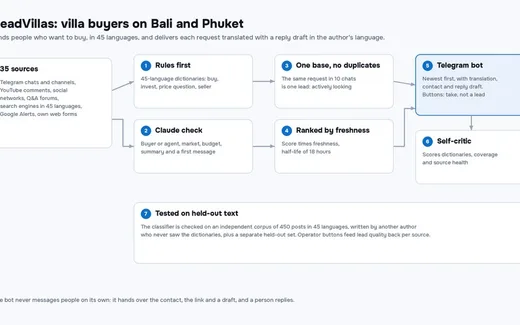
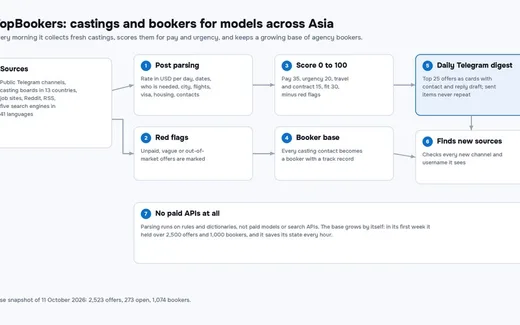
The same approach in two more markets. I built two sister systems on the same idea, each tuned to its market: LeadVillas finds people looking to buy villas on Bali and Phuket in 45 languages, across Telegram chats, YouTube comments, social networks and search engines, and delivers each request translated with a reply draft in the author’s language. TopBookers finds fresh castings and agency bookers for models across Asia and the Gulf; its base holds over 2,500 offers and 1,000 bookers, each scored for pay, urgency and whether flights and visas are covered.
The rules Lead Radar keeps. It only reads public pages. It never posts, sends messages or signs in anywhere on anyone’s behalf, never stores secrets in the code, and never shows a lead it cannot back with the buyer’s own words.
My part. I designed it, wrote it and run it: architecture, scanners, filters, prompts, the CRM and the daily operation.